Peak Season Freight Rates: Why Your LTL Quotes Are Jumping in Q4 (and How to Fight Back)
Q4 LTL quotes climb for real reasons: capacity, GRIs, fuel surcharges and accessorials. Compare carriers side by side, verify shipment details, and plan holiday deadlines.
Blake Brunk
COO, FreightCake
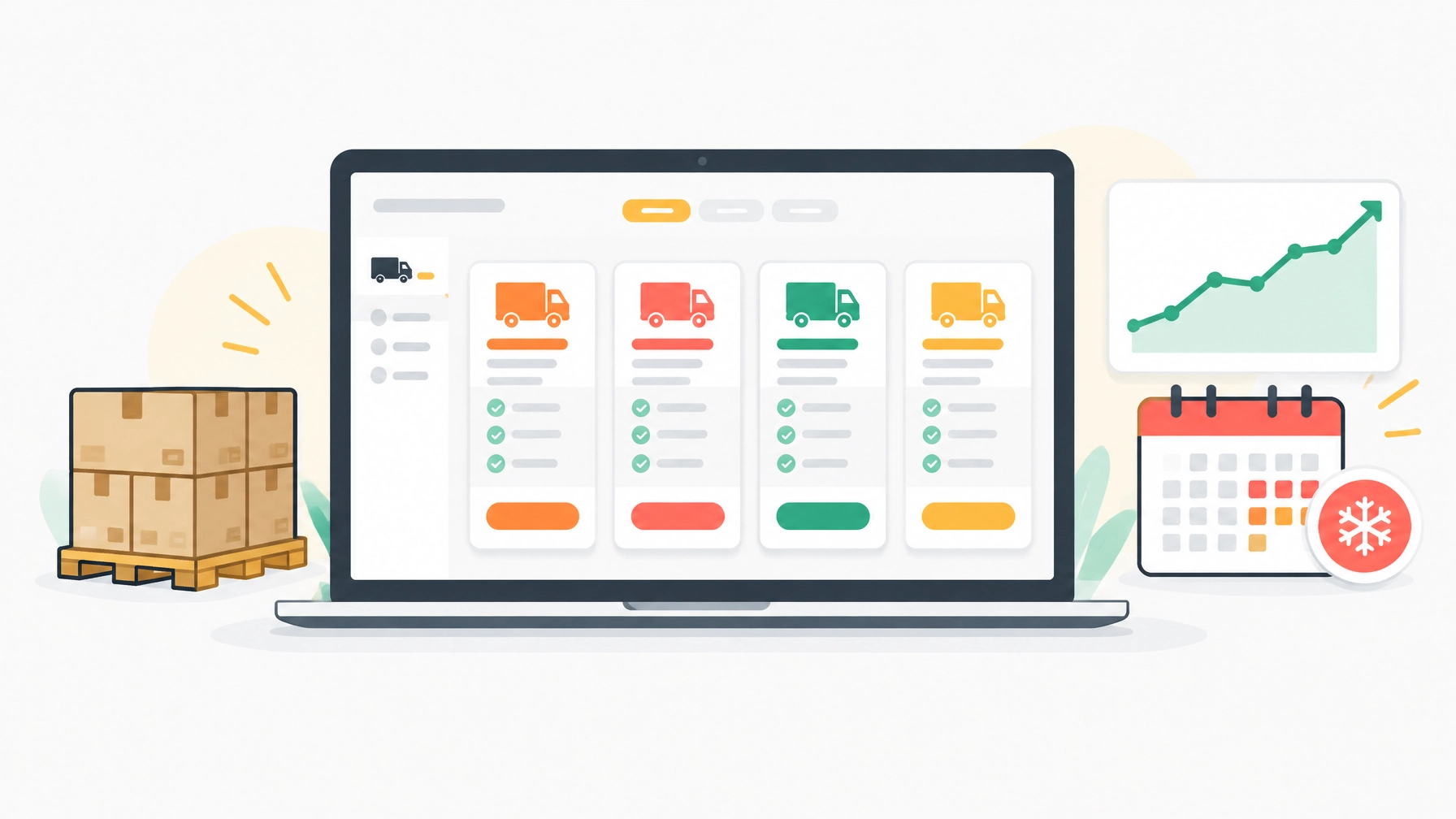
Q4 can put pressure on every part of your shipping budget. More freight competes for capacity, carriers adjust base rates, fuel surcharges move, and added services can raise the final bill.
For small businesses, the challenge is getting a clear all-in picture before a shipment is ready to move. You can’t control the market, but you can compare available carriers, confirm shipment details, and plan around important dates.
Why peak season freight rates rise
Capacity gets tighter. Holiday inventory, replenishment orders, and regular business freight all compete for pickups and space. When a lane gets busy, fewer available options can mean higher quotes or less flexibility on pickup and delivery timing.
General rate increases arrive earlier. Old Dominion announced a 4.9% general rate increase effective October 5, 2026. The carrier notes that the actual effect can vary by customer, lane, and distance. A GRI is not a guarantee that every shipment’s invoice rises by precisely 4.9%. It is a reminder to review your current quotes and agreements. (Old Dominion’s announcement)
Fuel surcharges change the total. A base rate and a fuel surcharge are separate parts of the cost. Fuel tables may be updated regularly, so the surcharge applied to a quote can change over time. Check the carrier’s current rules and the terms that apply to your account. (FedEx fuel surcharge information)
Accessorials add cost when shipment details call for them. Liftgate service, residential delivery, limited access, and inside delivery can affect the total. If a quote is built without a required service, the final charge may differ. Provide accurate pickup and delivery details before you compare rates.
Market forecasts also depend on what they measure. The TD Cowen/AFS Q4 2026 index forecast shows LTL rates at a record level, up 2.1% quarter over quarter and 8.8% year over year. That is not the same as a predicted increase on every shipment or invoice. (TD Cowen/AFS Freight Index) FreightWaves has reported carriers moving rate increases earlier, including Old Dominion’s October GRI. (FreightWaves coverage)
Compare carriers before you book
A single carrier quote tells you what one option costs. It doesn’t show whether another carrier has a better fit for the lane, service level, or delivery window.
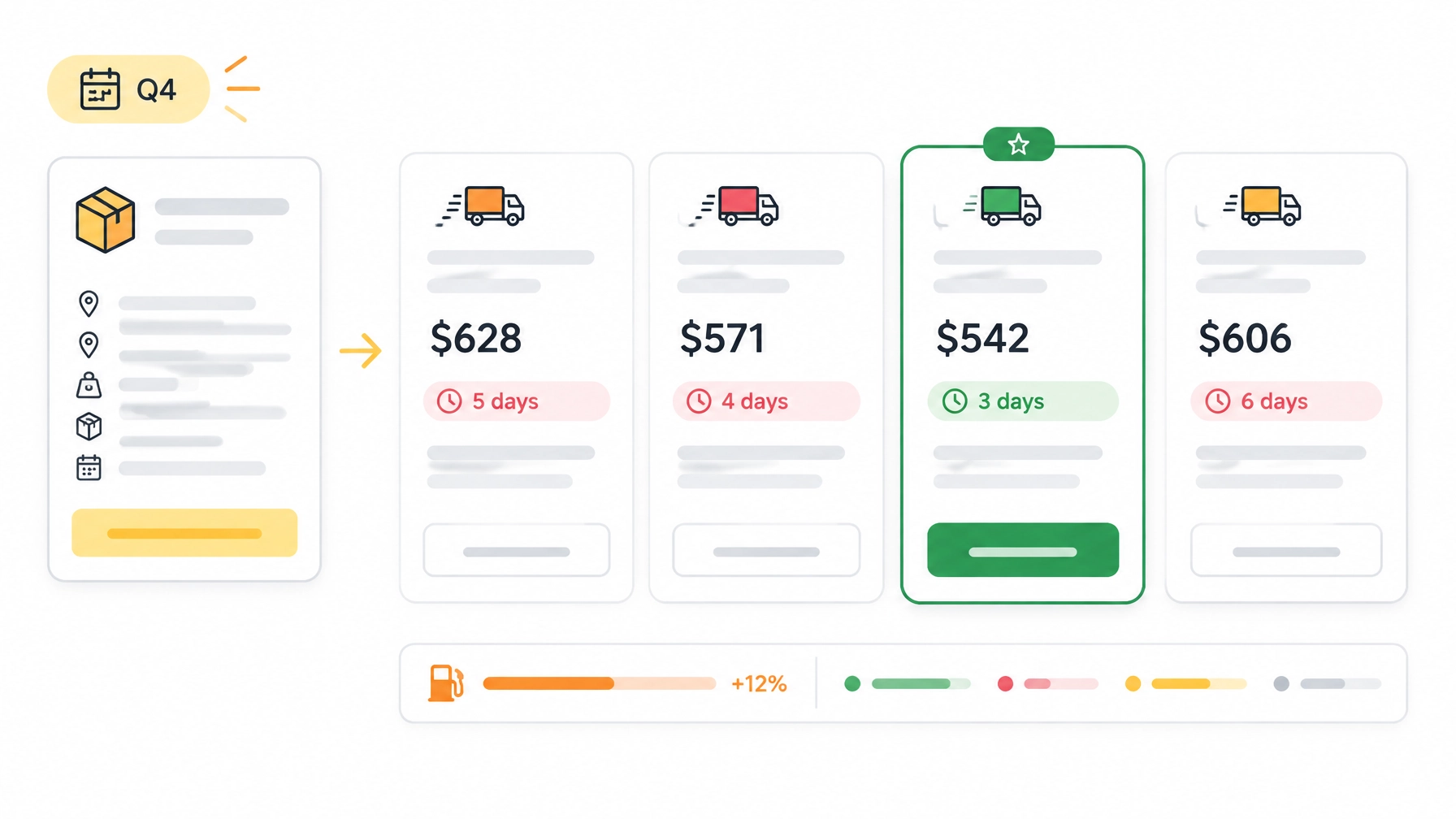
Compare available national and regional LTL options side by side. Review the total price, transit estimate, included accessorials, and service details before you choose. The lowest base rate may not be the lowest all-in cost.
Rate board: illustrative example
| Carrier | Transit | Quote | Status |
|---|---|---|---|
| Carrier A | 3 business days | $284.10 | Best value |
| Carrier B | 3 business days | $312.50 | Standard |
| Carrier C | 2 business days | $348.75 | Faster option |
Illustrative example only. Carrier names and prices are not live rates.
FreightCake brings available LTL carrier options into one rate board, with quotes averaging under 3 seconds. Enter your shipment once, compare results, then review and book your selection. Availability and pricing depend on the shipment and lane. See FreightCake LTL and rate shopping.
Book early, but check the quote terms
Waiting until the shipping dock is full limits your options. Submit quotes early enough to compare carriers and schedule a pickup that fits your operating calendar. Early planning can give you more time to resolve a coverage issue or adjust a delivery plan.
Before booking, check how long the quote is valid and whether the rate includes the services you need. Don’t assume that a quote automatically holds a price indefinitely. Review the terms shown for the rate, confirm the shipment details, and book once the option works for your shipment.
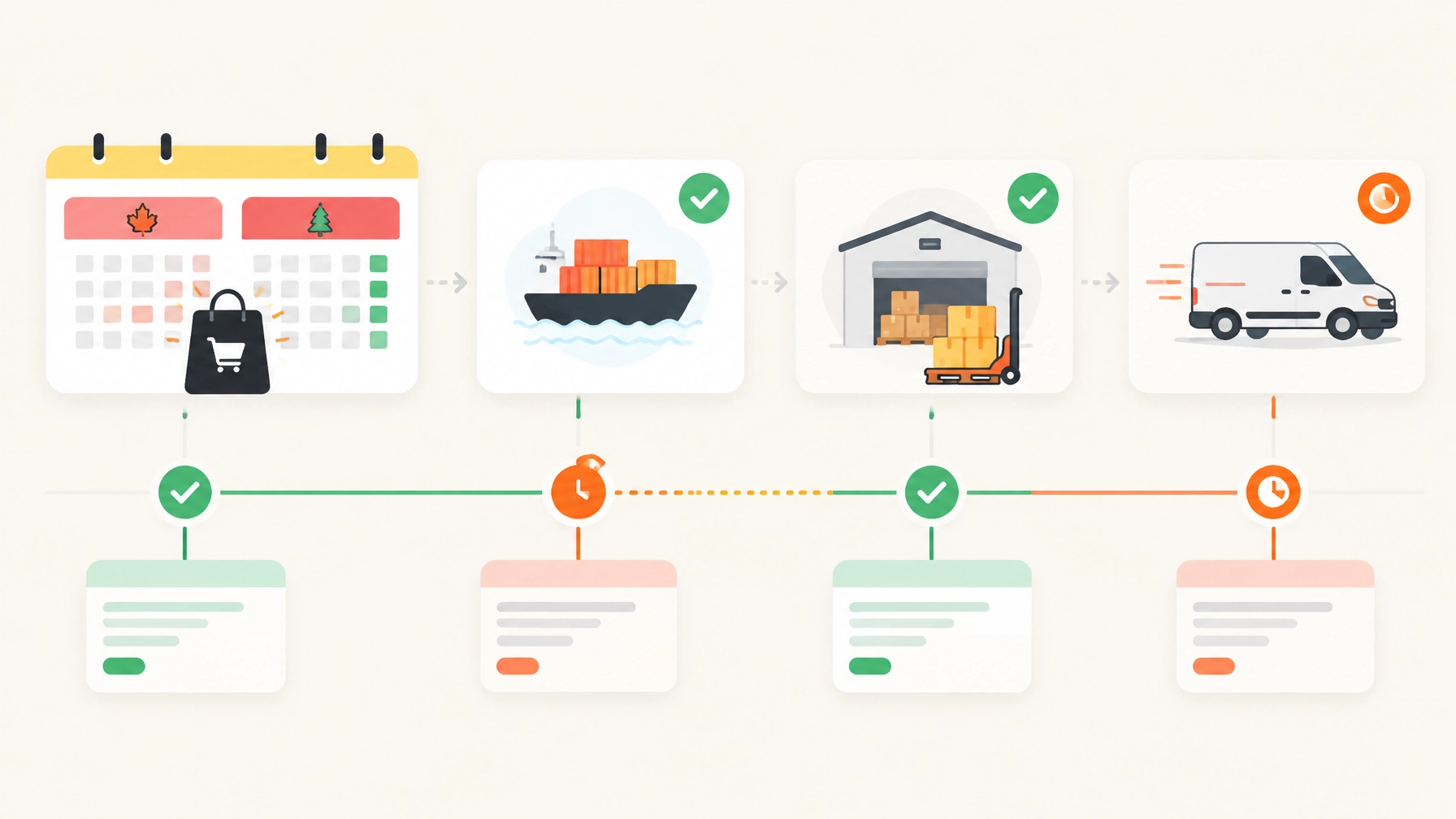
For Black Friday inventory, work backward from when products need to be available for sale, not just the date a customer expects delivery. Consider warehouse receiving time, order processing, and any transfer between facilities.
Get the class, weight, and dimensions right
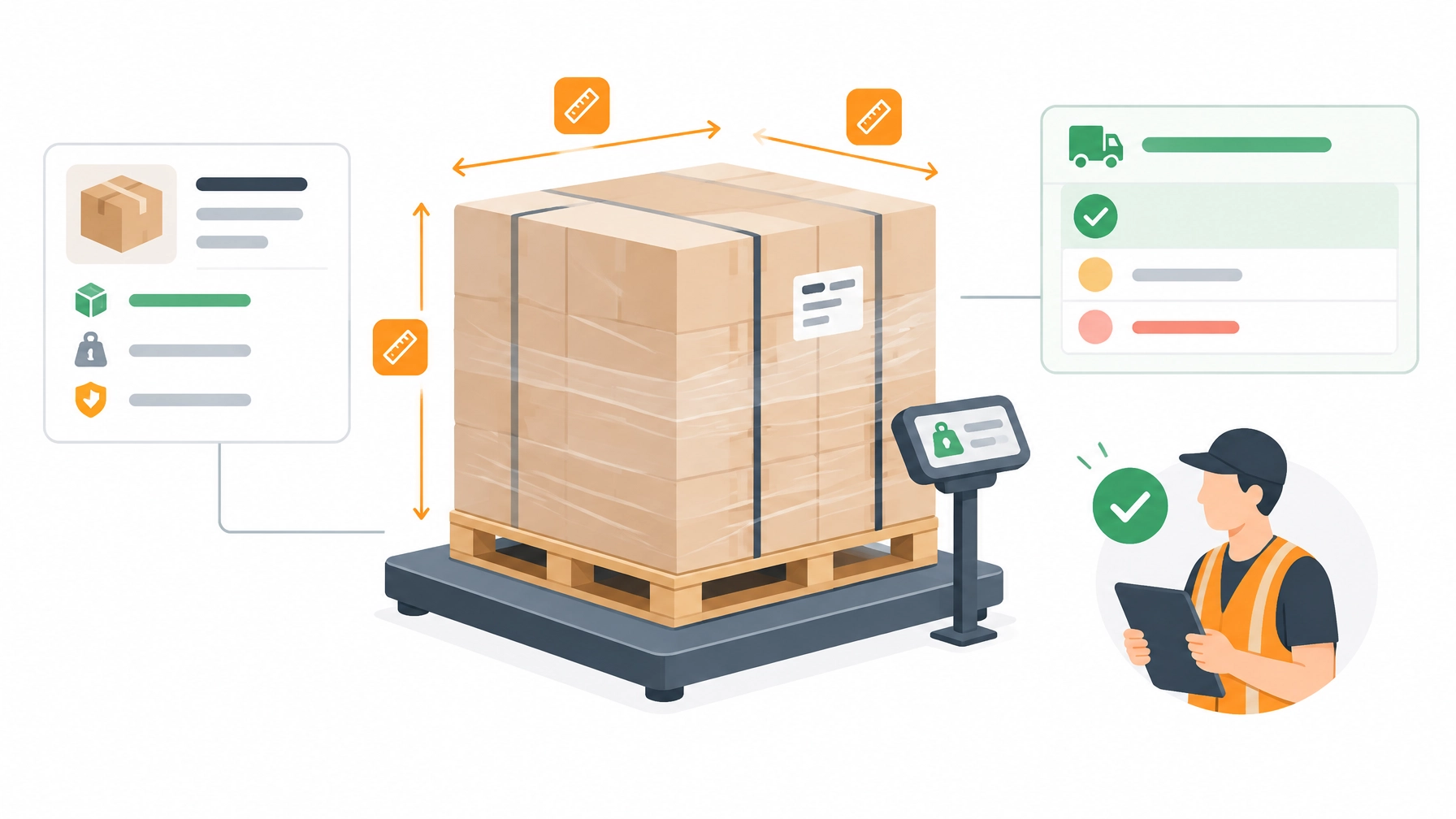
An inaccurate freight class, weight, or pallet size can lead to a reweigh or reclassification adjustment. Those charges can erase the difference between two quotes.
Before submitting a shipment:
- Weigh the finished, wrapped pallet, not just the product.
- Measure the full length, width, and height, including overhang.
- Describe the commodity and packaging accurately.
- Include required services, such as a liftgate or residential delivery.
- Check the bill of lading against the shipment before dispatch.
FreightCake can suggest freight class and relevant NMFC information from shipment details. Treat the recommendation as a starting point: review the commodity, density, and packaging details, then confirm the class before booking. The suggestion helps prepare the shipment; it does not replace your review.
Consolidate shipments when the timing works
Several small shipments to the same destination can create extra handling and repeated minimum charges. If delivery dates allow, consider combining orders into a properly packed pallet or coordinating replenishment into fewer pickups.
Consolidation is not automatically cheaper. Compare the shipment as it will actually move, including the added weight, dimensions, class, and delivery requirements. Then review the available quotes for the consolidated load against the separate shipments.
Plan holiday shipping deadlines for small business
Holiday shipping deadlines for small business depend on the service, destination, and the time needed to receive and process orders. Build internal cutoffs with a buffer rather than treating a carrier’s final recommended send-by date as your operating plan.
For parcel shipments, USPS currently recommends December 17 for Ground Advantage and First-Class Mail, December 18 for Priority Mail, and December 19 for Priority Mail Express in the contiguous United States. These are recommended dates, not delivery guarantees. Check the USPS 2026 holiday shipping dates and the UPS holiday schedule for current service details.
LTL has its own pickup, transit, receiving, and appointment considerations. Confirm those directly against your shipment and destination. If you are shipping Black Friday inventory into a fulfillment center, set an earlier internal arrival date to account for receiving time and possible schedule changes.
Use one workflow to manage Q4 shipments
A practical Q4 workflow is straightforward:
- Enter accurate addresses, commodity, weight, dimensions, and services.
- Compare available carrier rates and transit estimates side by side.
- Review class suggestions, accessorials, and quote terms.
- Confirm your carrier choice and book.
- Track shipment milestones and adjust plans when needed.
FreightCake supports real-time LTL comparison, booking, BOL generation, and shipment visibility in one platform. FreightCake AI can help prepare shipment details and suggest class information for review. You stay in control of the final selection and confirmation. See FreightCake AI.
Peak season freight rates may keep moving, but your process can stay consistent: compare options, submit complete shipment details, and plan deadlines with room to act. Run a rate shop, review your options, and book the carrier that fits. Get started with FreightCake.